


Presidency of Defence Industries (SSB) Deputy President Mustafa Murat Şeker announced in late November 2026 that Turkish naval and private shipyards are currently building more than 50 military platforms simultaneously—a pace he characterized as a global shipbuilding record—underscoring the rapid expansion of Türkiye’s maritime defense-industrial capacity and export orderbook.
Speaking during defense-industrial briefings in late November 2026 alongside broader updates on SSB’s active portfolio—which now encompasses over 1,400 defense projects valued at $150 billion, a domestic localization rate reaching 83 percent, and annual defense and aerospace exports exceeding $10 billion across 185 countries—Şeker highlighted how concurrent naval construction spans both state naval dockyards and private commercial shipyards. Coordinated by SSB alongside prime defense contractors including STM, ASFAT, ASELSAN, HAVELSAN, and ROKETSAN, the active pipeline encompasses major Turkish Navy modernization programmes—such as İstif-class frigates, Hisar-class offshore patrol vessels, TF-2000 air-defense destroyers, Reis-class submarines, the indigenous MİLDEN submarine, and armed unmanned surface vessels—alongside corvette, frigate, and patrol-boat export contracts for allied navies including Pakistan, Ukraine, Malaysia, Portugal, and Romania.
TECHNICAL SPECIFICATIONS: TÜRKİYE’S CONCURRENT NAVAL SHIPBUILDING PORTFOLIO
1. Industrial Scale, Shipyard Ecosystem & Macroeconomic Context
⚡ Official Attribution & Scale: Announced by SSB Deputy President Mustafa Murat Şeker in late November 2026; more than 50 military naval vessels and platforms are under simultaneous construction across Turkish shipyards for domestic and export customers
⚡ Broader SSB Portfolio & Export Metrics: Forms part of over 1,400 active SSB projects totaling $150 billion in cumulative programme value, supported by ~100,000 defense-sector personnel, $3.4 billion in R&D spending, an 83% domestic content rate, and over $10 billion in annual defense/aerospace exports across 185 countries
⚡ Shipyard & Prime Contractor Network: Distributed across state naval shipyards (Istanbul Naval Shipyard, Gölcük Naval Shipyard) and private yards (Sefine, Anadolu/ADİK, Sedef, RMK Marine, Dearsan, ARES, Yonca) with combat-system integration led by STM, ASFAT, ASELSAN, HAVELSAN, ROKETSAN, and Meteksan Defence 
2. Key Concurrent Surface, Subsurface & Uncrewed Programmes
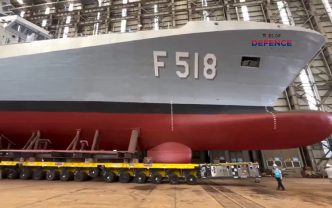
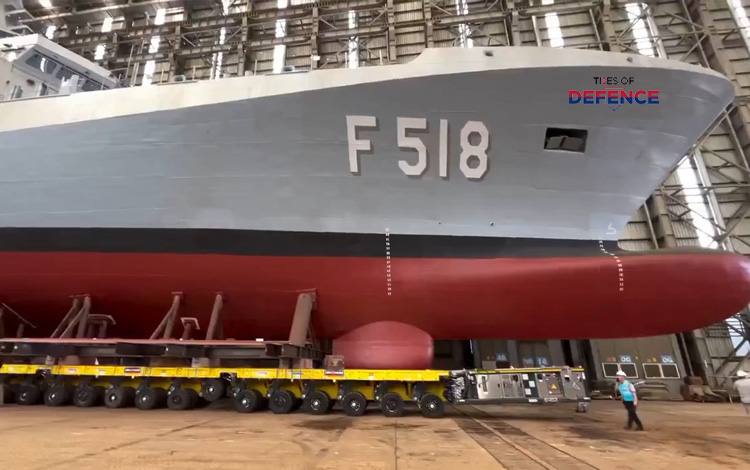
💥 Major Surface Combatants & Patrol Ships: Seven follow-on İstif-class (MİLGEM Batch II) frigates fitting out or under construction following lead ship TCG İstanbul (F-515), early block construction on the TF-2000 air-defense destroyer, six Hisar-class (ADKG) offshore patrol vessels (with lead ship TCG Koçhisar commissioned in June 2026 and sister ship Akhisar exported to Romania), and export MİLGEM/Ada-class combatants for Pakistan, Ukraine, and Malaysia
💥 Subsurface Fleet Modernization: Ongoing outfitting and trials across the six-boat Reis-class (Type 214TN) air-independent propulsion submarine programme at Gölcük alongside initial construction of Türkiye’s first indigenously designed MİLDEN national submarine (first weld initiated in January 2025)
💥 Uncrewed & Auxiliary Maritime Systems: Serial production and integration of armed unmanned surface vessels (including ULAQ, MARLİN, SANCAR, and SALVO) alongside mine-countermeasure, amphibious landing, and logistic support vessels
TIMES OF DEFENCE ASSESSMENT
SSB Deputy President Mustafa Murat Şeker’s disclosure that Turkish shipyards are simultaneously building more than 50 military platforms highlights three critical shifts in maritime industrial strategy, sovereign subsystem integration, and global naval exports:
1. Leveraging Public-Private Shipyard Parallelism to Multiply Hull Output: Distributing hull construction across state naval dockyards and private commercial yards breaks traditional single-yard bottlenecks, enabling simultaneous delivery of frigates, offshore patrol vessels, submarines, and unmanned craft.
2. Capturing High-Value Combat Systems Through Domestic Subsystem Localization: Pairing local hull fabrication with indigenous combat management systems (HAVELSAN), radars/EW suites (ASELSAN), and anti-ship/air-defense missiles (ROKETSAN) retains economic value domestically while insulating programmes from foreign export restrictions.
3. Turning Domestic Fleet Expansion Into a Competitive Naval Export Engine: Proven serial builds for the Turkish Navy provide reference designs, shorter delivery schedules, and integrated logistics packages that help Türkiye win corvette, frigate, and patrol vessel orders across Europe, the Middle East, and Asia.

