


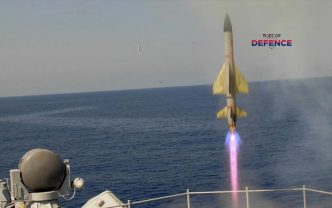
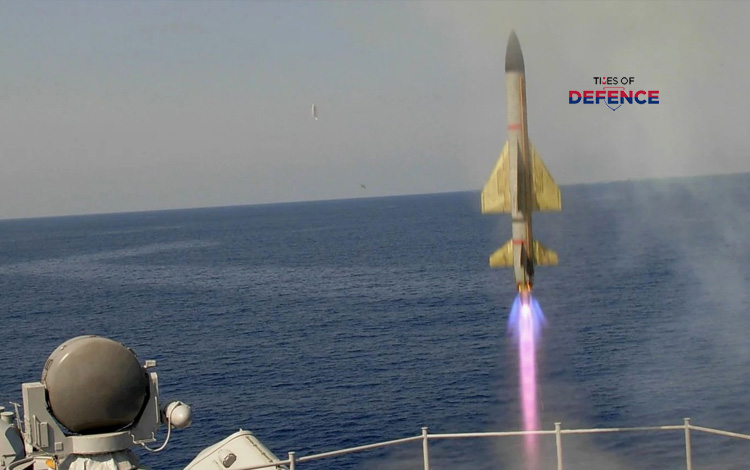
India’s Ministry of Defence (MoD) signed a contract valued at Rs 19.76 billion (Rs 1,976.40 crore / approximately USD 212 million) on November 18, 2026, with Israel Aerospace Industries (IAI) for the comprehensive hardware and software upgradation and obsolescence management of the Barak Point Defence Missile System deployed across frontline Indian Navy warships.
Executed under India’s Other Capital Procurement Procedure in the presence of Defence Secretary Rajesh Kumar Singh, the agreement implements a modernization initiative cleared by the Defence Acquisition Council (DAC) in August 2025. Originally procured by New Delhi starting in 2000 and developed jointly by IAI and Rafael Advanced Defence Systems, the Barak-1 point-defense suite serves as the inner-layer anti-air shield aboard major Indian naval combatants—including the aircraft carrier INS Vikramaditya, Delhi-class destroyers, and Shivalik-class and Brahmaputra-class frigates. By replacing aging legacy electronics and refreshing fire-control software, the upgrade extends the operational service life of the fleet’s existing missile launchers while restoring potent, all-weather protection against sea-skimming anti-ship missiles, uncrewed aerial vehicles (UAVs), and hostile aircraft.
TECHNICAL SPECIFICATIONS: BARAK POINT DEFENCE MISSILE SYSTEM (BARAK-1) UPGRADE ARCHITECTURE
1. Shipboard Launch Architecture & Interceptor Kinematics
⚡ Prime Developers & OEMs: Israel Aerospace Industries (IAI) and Rafael Advanced Defence Systems (Israel)
⚡ Vertical Launch System (VLS): Compact, modular 8-cell Vertical Launch Unit (VLU) configured for space-constrained deck integration without requiring dedicated below-deck magazine structures
⚡ Interceptor Dimensions & Propulsion: Solid-propellant rocket motor with thrust-vector control (TVC) for rapid vertical turnover immediately after launch; measures 2.17 meters in length with a 98 kg launch mass and a 22 kg blast-fragmentation warhead fitted with a proximity fuze
⚡ Engagement Envelope: Intercepts supersonic and subsonic sea-skimming anti-ship missiles, manned combat aircraft, and drones across ranges from 500 meters out to 10–12 kilometers at speeds exceeding Mach 2 
2. Fire-Control Radar, Guidance & Modernization Scope
💥 Guidance & Fire Control: Command-to-Line-of-Sight (CLOS) guidance driven by shipborne multi-purpose tracking and guidance radar (such as the EL/M-2221 STGR), enabling simultaneous multi-target engagement in severe electronic countermeasures (ECM) environments
💥 Hardware & Software Overhaul: Comprehensive replacement of obsolete electronic subsystems, processor units, and legacy fire-control software algorithms to counter modern low-observable and maneuvering aerial threats
💥 Fleet Platform Integration: Deployed across key Indian Navy surface assets including INS Vikramaditya, Delhi-class guided-missile destroyers, and Shivalik-class and Brahmaputra-class multi-role frigates
TIMES OF DEFENCE ASSESSMENT
India’s Rs 19.76 billion contract with Israel Aerospace Industries to modernize its Barak point-defense missile systems highlights three critical strategic shifts in naval air defense and fleet sustainment:
1. Extending Lifecycle Value of Proven Inner-Layer Air Defenses: Rather than undertaking costly hull modifications to strip out legacy launchers on mid-life destroyers and frigates, targeted hardware and software obsolescence management preserves combat readiness across existing Indian Navy combatants at a fraction of new-build procurement costs.
2. Reinforcing Last-Ditch Defense Against Sea-Skimming and Drone Threats: Modern maritime conflict zones feature proliferating anti-ship cruise missiles and unmanned aerial systems. Upgrading fire-control processing and sensor integration ensures the Barak-1 continues to provide a rapid-reaction inner defensive layer beneath India’s longer-range Barak-8 (LR-SAM) area air-defense umbrella.
3. Deepening Bilateral Indo-Israeli Naval Industrial Cooperation: Building on over two decades of joint naval air-defense integration—spanning Barak-1 through the co-developed Barak-8—this agreement reinforces long-term sustainment interoperability across the Indian Ocean Region.

