


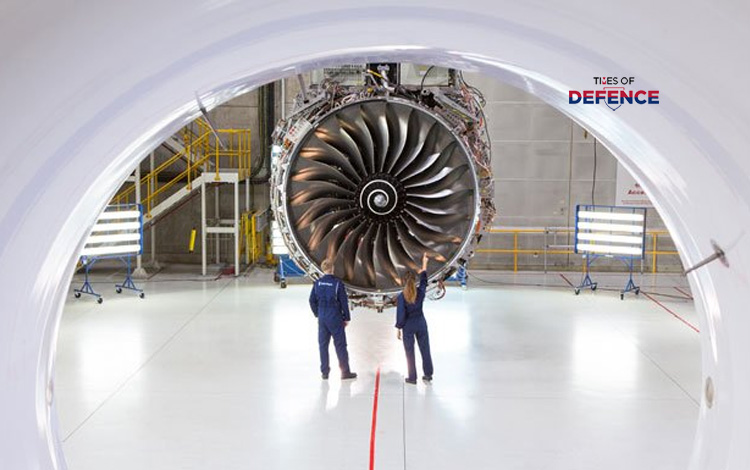
The UK Government and Rolls-Royce announced a joint 10-year, £2.5 billion ($3.2 billion) research and technology (R&T) partnership on October 28, 2026. The multi-decade strategic framework is engineered to accelerate next-generation gas turbine technologies, sustain sovereign defense propulsion capabilities, and position the UK for a return to the single-aisle (narrowbody) commercial engine market.
Subject to definitive final agreement, the initial stages of the programme aim to safeguard and support 3,300 UK high-tech jobs by 2029 across engineering, advanced manufacturing, and materials research. The co-funded initiative establishes an active engine demonstrator project, leveraging core propulsion technologies—such as Rolls-Royce’s UltraFan geared turbofan architecture—to drive lower emissions, maximize thermal efficiency, and preserve critical sovereign manufacturing capacity for both civil aviation and future military combat aircraft platforms.
TECHNICAL SPECIFICATIONS: NEXT-GEN GAS TURBINE & DUAL-USE PROPULSION ARCHITECTURE
Program Governance, Funding Structure & Economic Impact
⚡ Authority & Partners: UK Department for Business and Trade (DBT) & Rolls-Royce Holdings plc
⚡ Financial Allocation: £2.5 Billion total joint R&T investment over a 10-year operational window
⚡ Industrial Footprint: Anchor hub in Derby, supported by nationwide UK supply-chain networks, advanced manufacturing facilities, and specialized research centers
⚡ Workforce Impact: Protects 3,300 high-skilled engineering/R&D positions through 2029; potential long-term creation of tens of thousands of jobs and £120B economic contribution over the programme’s operational lifecycle
⚡ Key Target Markets: Commercial narrowbody single-aisle platforms (mid-to-late 2030s service entry targets) and 6th-generation military combat aircraft propulsion networks 
Advanced Engine Demonstrator & Dual-Use Technological Envelope
💥 Core Thermal Architecture: Next-generation high-pressure turbine cores combined with ultra-high bypass ratio (UHBPR) geared turbofan configurations (built on UltraFan scalable technology)
💥 Advanced Material Science: Integration of Ceramic Matrix Composites (CMCs) for high-temperature turbine blades and lightweight carbon-titanium (CTi) fan blades
💥 Combustion & Emission Control: Low-emissions lean-burn combustors optimized for 100% Sustainable Aviation Fuel (SAF) compatibility and potential hybrid-electric subsystem integration
💥 Sovereign Military Synergies: Directly reinforces sovereign gas turbine design, testing, and manufacturing infrastructure vital for future defense programs, including GCAP / Tempest combat air platforms and naval surface fleet power generation
TIMES OF DEFENCE ASSESSMENT
The joint £2.5 billion R&T investment by the UK Government and Rolls-Royce marks a critical milestone for Western defense industrial strategy and commercial aerospace competitiveness.
From a defense technology and aerospace industrial base perspective, this announcement offers three core strategic insights:
1. **Preserving Sovereign Capabilities in High-End Combat Propulsion**: Designing, developing, and manufacturing high-thrust military gas turbines is a rare sovereign capability retained by only a small number of nations. Co-funding dual-use gas turbine technologies ensures that the UK maintains the specialized engineering talent, high-temperature testing facilities, and supply-chain resilience required to power next-generation combat air platforms like GCAP (Global Combat Air Programme) without relying on foreign OEMs.
2. **Dual-Use Technology Cross-Pollination**: Innovations in ceramic matrix composites (CMCs), advanced thermal management, digital twin modeling, and high-efficiency core architectures developed for civil narrowbody engines directly bleed into military engine programs. Combining civil and defense R&D under one £2.5B umbrella maximizes capital efficiency and lowers the development risk profile across both domains.
3. **Strategic Positioning for the Next-Gen Single-Aisle Replacement Cycle**: Since the commercial withdrawal of the IAE V2500, Rolls-Royce has focused primarily on widebody airliners (e.g., Trent XWB, Trent 7000). Positioning UltraFan derivative technologies through an active engine demonstrator gives Rolls-Royce the technical maturity needed to compete for the upcoming mid-2030s narrowbody replacements from Airbus and Boeing, securing long-term industrial scale across the UK defense and commercial aerospace supply chains.

