


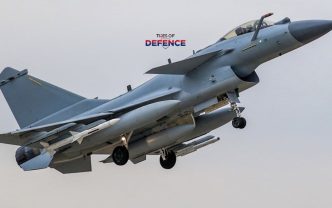
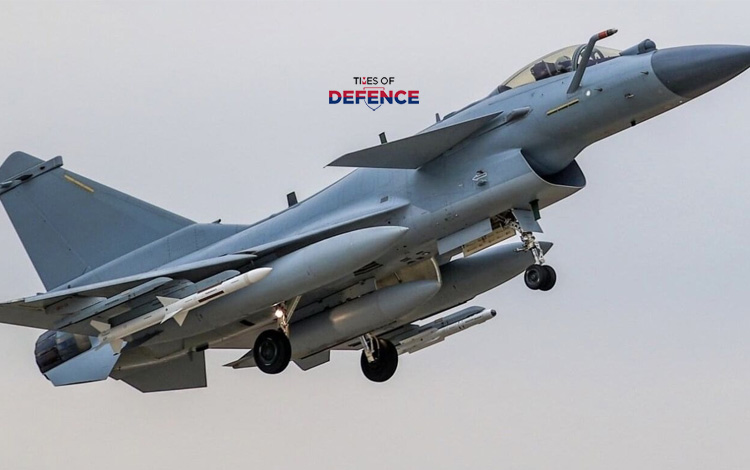
The deployment of Russian-supplied Sukhoi Su-35 Flanker-E heavy air superiority fighters to the Ethiopian Air Force (EAF) has exacerbated long-standing aerial power disparities along the Nile Basin, accelerating the Egyptian Air Force’s (EAF) effort to procure Chengdu J-10C Vigorous Dragon fighters from China.
The strategic shift follows the 2021 cancellation of Egypt’s planned acquisition of 24 Su-35s due to Western sanctions pressure (CAATSA). This left Cairo’s tactical fighter inventory reliant on platforms with constrained BVR (Beyond-Visual-Range) capabilities—such as weapon-downgraded F-16C/D Block 52s (restricted to AIM-7P/M and early AIM-9 variants) and French Rafales delivered without long-range Meteor air-to-air missiles. With Ethiopia fielding heavy, un-downgraded Su-35s equipped with N035 Irbis-E passive electronically scanned array (PESA) radars and long-range R-77-1 / R-37M air-to-air effectors, the EAF faces a tactical deficit over regional chokepoints and the Grand Ethiopian Renaissance Dam (GERD) axis. The potential acquisition of the J-10C provides Cairo with a modern 4.5-generation single-engine fighter capable of employing long-range PL-15 and PL-10 missile suites.
TECHNICAL SPECIFICATIONS: CHENGDU J-10C vs. SUKHOI SU-35 AIR COMBAT COMPARISON
Procurement & Fleet Dynamics
⚡ Target Platform: Chengdu J-10C “Vigorous Dragon” (EAF Candidate / Pakistan Air Force Operational Baseline)
⚡ Counterpart Platform: Sukhoi Su-35 “Flanker-E” (Ethiopian Air Force Baseline)
⚡ Operational Context: Nile Basin Deterrence, Grand Ethiopian Renaissance Dam (GERD) Airspace Vector, Red Sea/Suez Maritime Approaches
⚡ Primary Driver for Purchase: Replacement of legacy, weapon-restricted F-16 Block 52 airframes with an unrestricted 4.5-gen BVR interceptor platform 
Airframe Geometry & Flight Kinematics
💥 Flight Configuration: Canard-Delta Wing (J-10C) vs. Twin-Engine Super-Maneuverable Lifting-Body (Su-35)
💥 Engine Architecture: 1× AECC WS-10B/C Taihang Afterburning Turbofan (J-10C) vs. 2× Saturn AL-41F1S Thrust-Vectoring Turbofans (Su-35)
💥 Maximum Speed & Ceiling: Mach 1.8–2.0 / 17,000 m (J-10C) vs. Mach 2.25 / 18,000 m (Su-35)
💥 Dynamic Maneuverability: High-alpha short-period agility via active digital fly-by-wire canard controls paired with low RCS airframe sculpting (J-10C) vs. 3D thrust-vectoring post-stall maneuvering (Su-35)
Radars, Avionics & Electronic Warfare (EW) Suites
🚀 Primary Fire Control Radar: Airborne Active Electronically Scanned Array (AESA) with Gallium Nitride (GaN) T/R modules (J-10C) vs. N035 Irbis-E Hybrid PESA Radar (Su-35)
🚀 Sensor Fusion & Targeting: Integrated Electro-Optical Targeting System (EOTS), Helmet-Mounted Display/Sight (HMD/S), and internal broad-spectrum digital EW suite (J-10C)
🚀 Radar Cross Section (RCS): Reduced frontal RCS via Diverterless Supersonic Inlet (DSI) and radar-absorbent materials (RAM) (J-10C) vs. High-RCS heavy airframe (Su-35)
Air-to-Air Ordnance & Engagement Envelopes
🚀 Long-Range BVR Effector: PL-15 Dual-Pulse Motor AAM (Active AESA seeker, >200 km range profile) vs. R-77-1 (Active radar homing, ~110 km range profile) / R-37M (Hypersonic, >200 km against non-maneuvering support aircraft)
🚀 Short-Range WVR Effector: PL-10 High-Off-Boresight (HOBS) Imaging Infrared (IIR) AAM (J-10C) vs. R-73 / R-74 Thrust-Vectoring IR AAM (Su-35)
🚀 Tactical Advantage: The J-10C’s GaN AESA radar paired with the PL-15 missile provides resistance to high-power EW and superior terminal active homing compared to semi-active or legacy mechanical/PESA platforms.
TIMES OF DEFENCE ASSESSMENT
The strategic imbalance created by Ethiopia’s Su-35 acquisition highlights structural limitations in Egypt’s air combat inventory. While Egypt operates a large fleet of modern combat aircraft (including F-16s, Rafales, and MiG-29Ms), end-user restrictions and export-controlled armaments have degraded their BVR combat effectiveness. The U.S.-supplied F-16s remain deprived of AIM-120 AMRAAM capabilities, leaving them restricted to short-range or legacy semi-active radar-guided weapons. Simultaneously, French Rafales delivered to Cairo lack the Meteor missile, limiting their ability to out-range modern heavy air superiority fighters.
From a technical perspective, acquiring the Chinese J-10C provides the Egyptian Air Force with a modern air-to-air capability:
1. **BVR Dominance via PL-15 Integration**: The PL-15 missile, guided by the J-10C’s airborne AESA radar, offers an active radar terminal seeker paired with a dual-pulse rocket motor. This provides a significantly larger “No-Escape Zone” (NEZ) compared to the R-77-1 carried by Ethiopian Su-35s or the older AIM-7/AIM-9 variants in Egypt’s current inventory.
2. **Operational Cost and Readiness Efficiency**: As a single-engine medium-weight fighter, the J-10C features lower flight-hour costs and maintenance requirements compared to twin-engine heavy platforms like the Su-35 or Rafale. This allows high sortie rates and sustained air-patrol cycles over extended strategic distances.
3. **Unrestricted Defense Sovereignty**: Procuring from Beijing insulates Cairo from Western legislative arms embargoes and end-user usage restrictions, allowing Egypt to integrate sovereign C4ISR networks and employ advanced BVR munitions without foreign operational oversight.

