


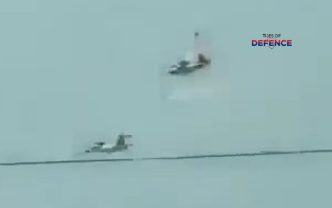
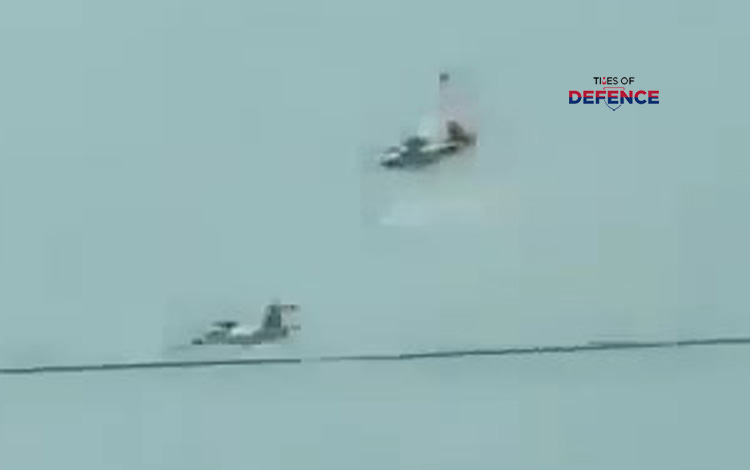
The Philippine Air Force (PAF) has initiated a safety investigation following a fatal mid-air collision involving two Leonardo/SIAI-Marchetti SF-260 light trainer aircraft near Fernando Air Base in Lipa City, Batangas.
The accident occurred at approximately 15:51 local time on October 23, 2026, during a formation flyby rehearsal exercise. Both aircraft impact zones were located within the perimeter of Fernando Air Base, resulting in the fatalities of all four flight crew members onboard (two pilots per aircraft). In accordance with official requests from the deceased aviators’ families, individual identities remain withheld. Following the collision, PAF Air Mobility Command placed all remaining operational SF-260FH and SF-260TP platforms under temporary flight grounding orders pending preliminary structural and flight control failure evaluations.
TECHNICAL SPECIFICATIONS: LEONARDO (SIAI-MARCHETTI) SF-260 TRAINER ARCHITECTURE
Manufacturer & Operator Profile
⚡ Lead Platform Design: SIAI-Marchetti (Now Leonardo S.p.A. Aircraft Division — Italy)
⚡ Local Assembly Integrator: Aerotech Industries Philippines (Clark Air Base)
⚡ Operating Unit & Primary Base: PAF Air Education, Training, and Doctrine Command (AETDC) / Fernando Air Base
⚡ Fleet Variants in Service: SF-260FH (Piston Trainer) and SF-260TP (Turboprop Light Attack/Advanced Trainer) 
Airframe Engineering & Kinematic Performance
💥 Airframe Type: Low-wing, fully aerobatic light military primary trainer / COIN platform
💥 Powerplant Configuration:
• SF-260FH: 1× Textron Lycoming AEIO-540-D4A5 6-cylinder air-cooled piston engine generating 260 hp (195 kW)
• SF-260TP: 1× Allison/Rolls-Royce 250-B17D turboprop engine generating 350 shp (261 kW)
💥 Dimensional Envelope: Wingspan: 8.35 m (27.4 ft) | Length: 7.10 m (23.3 ft) | Max Takeoff Weight (MTOW): 1,102 kg (2,430 lb)
💥 Flight Envelope Limits: Maximum speed: 441 km/h (237 knots) | Service ceiling: 5,790 m (19,000 ft) | Structural Load Limit: +6.0g / -3.0g
Avionics, Cockpit & Tactical Payload Hardware
🚀 Cockpit Layout: Side-by-side dual flight controls configuration featuring optical sight interfaces for weapons qualification
🚀 Underwing Weapon Hardpoints: 2× external wing pylons capable of carrying up to 300 kg (660 lb) total ordnance (gun pods, unguided rocket pods, light conventional bombs for SF-260TP COIN operations)
🚀 Structural Safety Systems: Reinforced canopy frame designed to withstand roll-over forces; conventional non-ejection seat canopy architecture
TIMES OF DEFENCE ASSESSMENT
The loss of four pilots and two SF-260 platforms at Fernando Air Base underscores the inherent risks associated with low-altitude close-formation maneuvers during military flyby rehearsals. Formation flybys demand strict visual reference monitoring, precise throttle response, and absolute spatial awareness; at low altitudes, aerodynamic turbulence, wingtip vortices, or momentary spatial disorientation can reduce pilot reaction windows to fractions of a second.
From a fleet management and flight training perspective, grounding the SF-260 fleet represents a severe operational bottleneck for the Philippine Air Force. The SF-260 serves as the primary screening platform for cadet pilots entering AETDC at Lipa. Grounding the type interrupts student flight training cycles and delays qualification progressions onto advanced turboprop or jet assets (such as the FA-50PH). Furthermore, because the light aircraft lacks ejection seats, mid-air structural contact at low altitude offers flight crews virtually no opportunity for emergency bailout, highlighting the critical need for flight data recorder recovery to isolate whether mechanical flight control binding or human factors led to the collision.

