


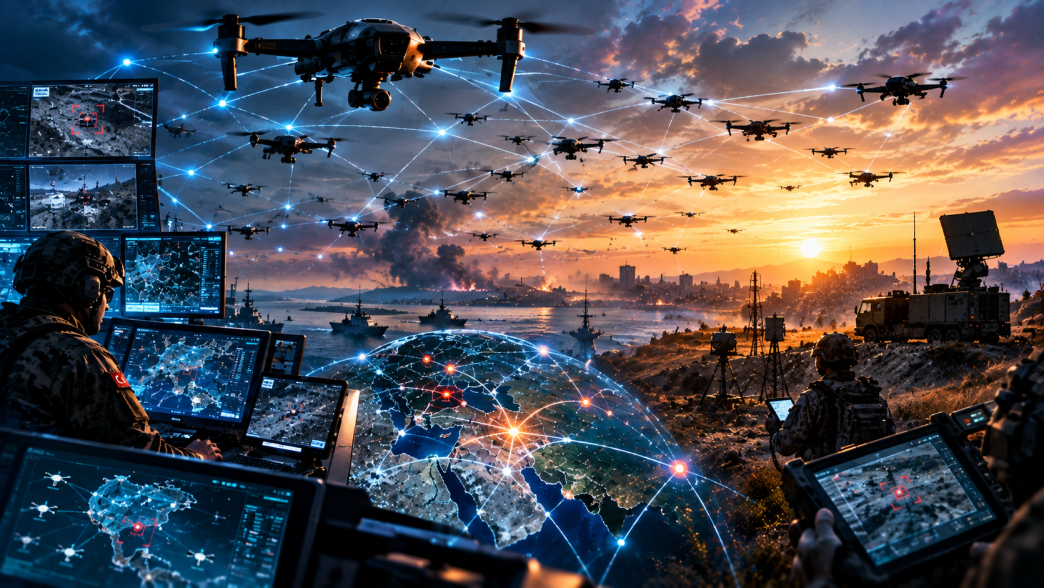
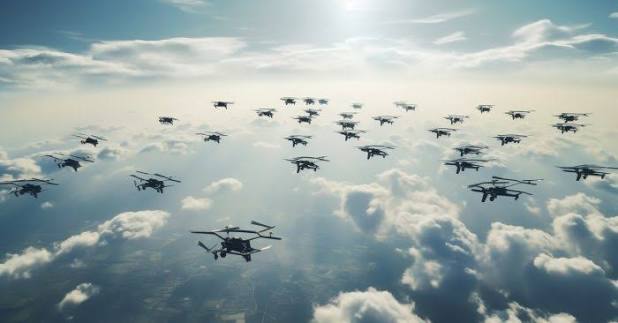
The Russia-Ukraine war has shown that unmanned systems have moved beyond being auxiliary elements of modern warfare and have become central to military operations. However, the simultaneous use of hundreds or even thousands of drones on the battlefield does not, by itself, mean that warfare has transitioned to “swarm” technology.
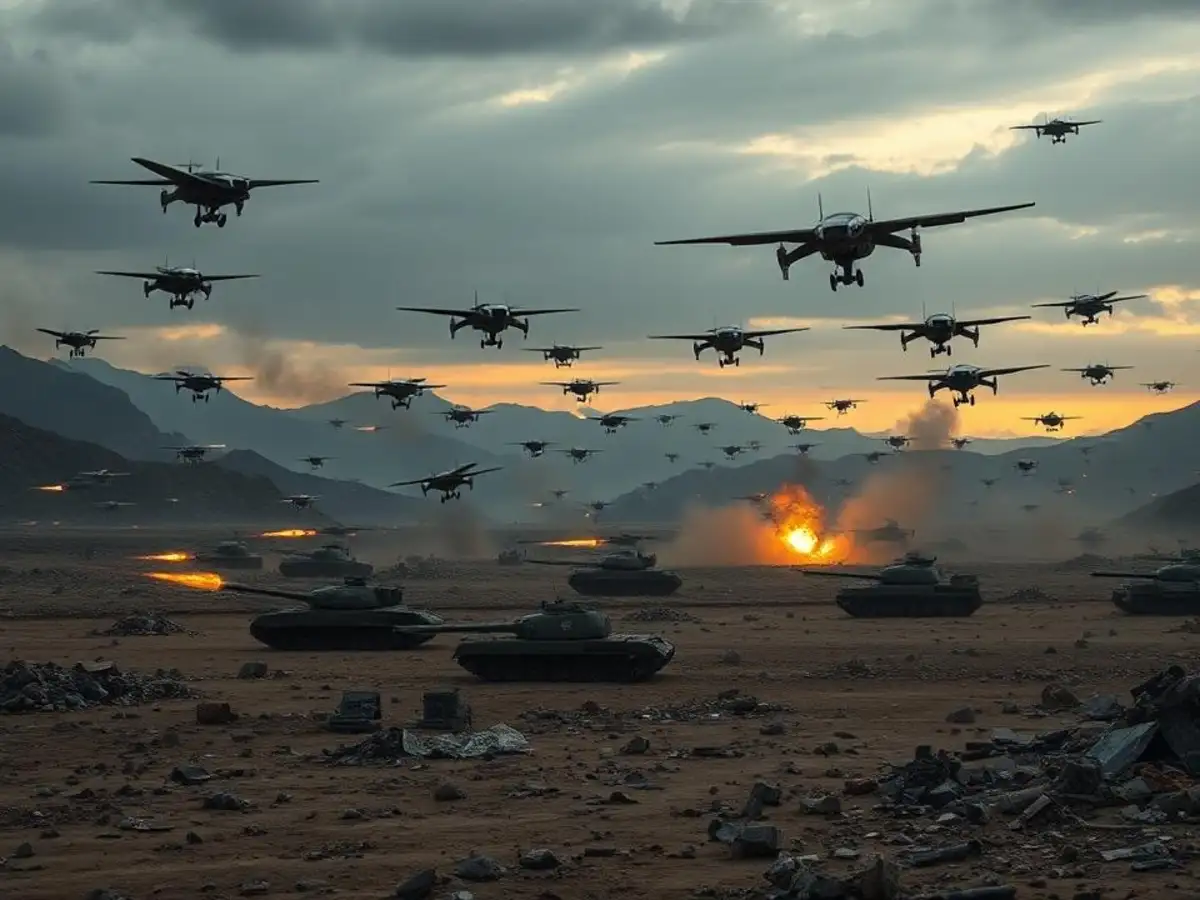
The real transformation lies not in the number of drones, but in the extent to which they can operate in coordination with one another. The ability of a group of unmanned systems to share targets, redistribute missions after losses, continue operating under electronic warfare conditions, and respond to developments on the battlefield while minimizing human intervention forms the foundation of genuine swarm capability.
Today, Russia and Ukraine are at different stages of this transformation. On one side, mass drone attacks supported by high production capacity stand out; on the other, increasingly advanced autonomous coordination and task-sharing are emerging. However, a structure in which these two elements have been combined simultaneously, sustainably, and at strategic scale has not yet emerged.
The true meaning of the swarm concept
From a military perspective, the fundamental factor determining swarm technology is not the number of platforms launched into the air at the same time, but how much of the decision-making process is delegated to the system itself.
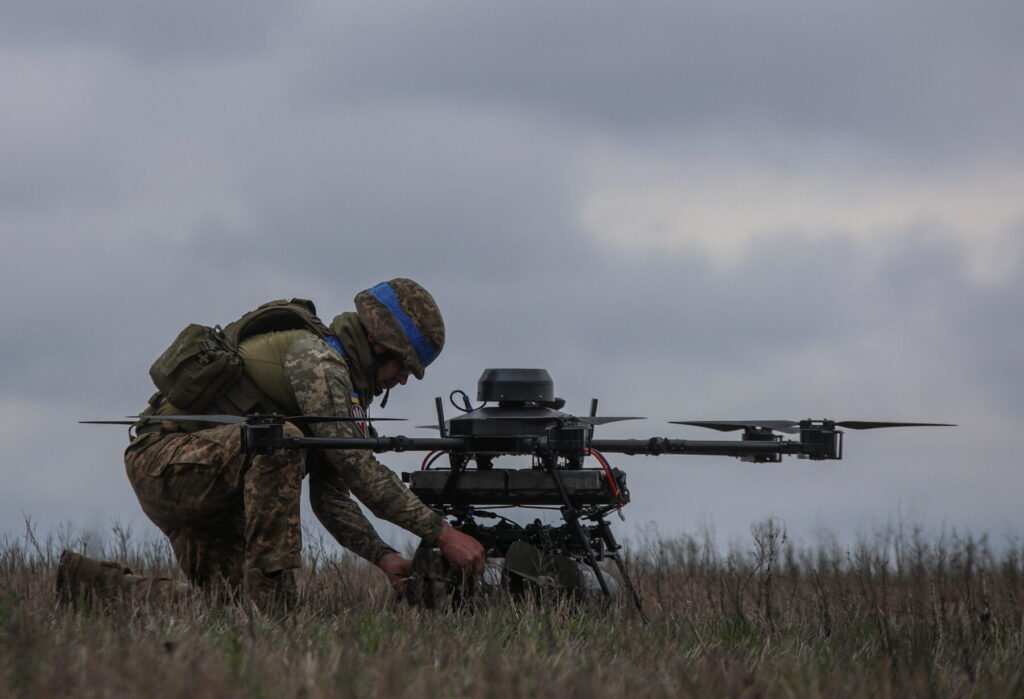
For example, hundreds of drones can be sent toward a target area simultaneously along predetermined routes. This can create a very large and effective strike package, but if the systems do not exchange information with one another, there is no genuinely autonomous swarm.
By contrast, if unmanned platforms take one another’s positions and missions into account, assume the tasks of lost elements, alter their routes according to new targets, and accomplish all of this without requiring centralized human command, the nature of warfare begins to change.
For this reason, the strategic value of future warfare will not be measured solely by the question, “How many drones are there?” The more important question will be how independently the network formed by these platforms can make decisions.
Russia’s advantage: mass production
Throughout the war, Russia has largely industrialized the use of one-way attack drones. The production of very large numbers of different platforms, particularly members of the Shahed/Geran family, has allowed Moscow to continuously increase the intensity of its attacks.
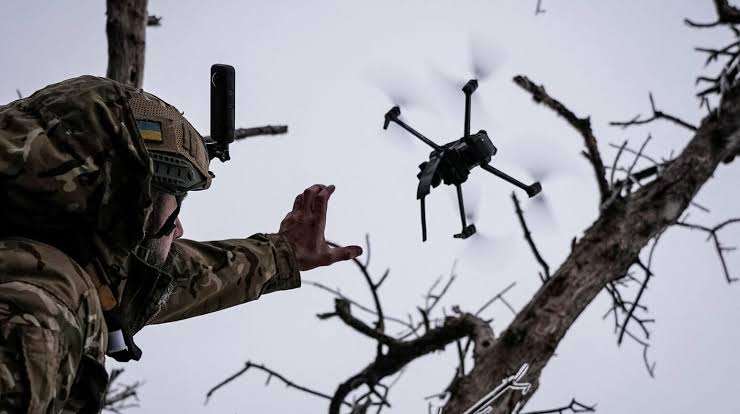
The impact of these attacks does not come solely from the warheads they carry. The use of attack and decoy platforms flying at different altitudes and along different routes within the same strike package is intended to strain air-defense detection and engagement capacity. When defenders face a large number of targets simultaneously, they may be forced to use expensive interceptors against much lower-cost systems.
However, there is an important distinction here. Large-scale attack and autonomous swarm warfare are not the same thing.
Russia’s existing mass-attack capability provides an important foundation for the emergence of more advanced networked and autonomous systems in the future. Yet the current picture does not indicate that a genuinely decentralized swarm architecture, in which hundreds of attack drones distribute targets through a shared decision-making mechanism during flight and reorganize their missions according to losses, has fully emerged.
Ukraine’s different approach
Ukraine, meanwhile, is increasingly focusing on coordination and autonomy as a result of the demands created by the war. In some systems developed in recent years, instead of requiring a human operator to make separate decisions for each drone, there is a growing tendency to define the overall framework of the mission and delegate part of the remaining decision-making to software and the network architecture.
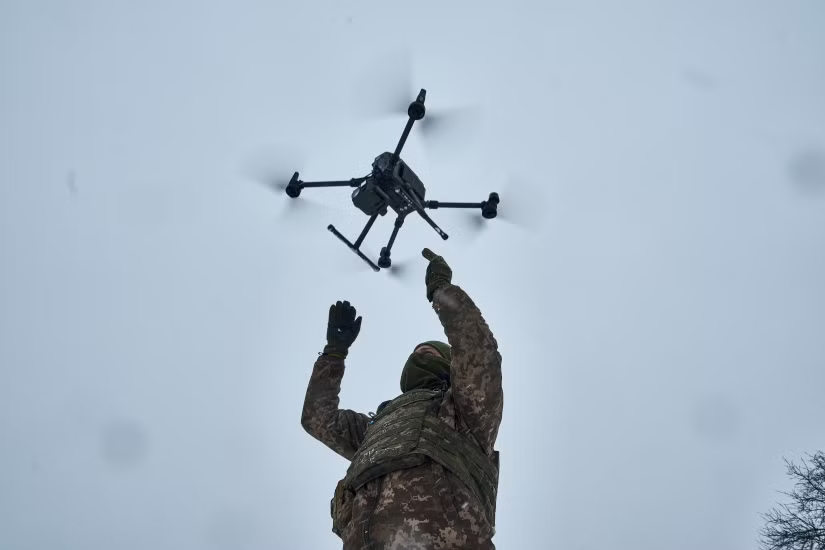
This approach is significantly different from conventional FPV drone operations. The ability of multiple platforms to share functions such as reconnaissance, attack, target tracking, and mission changes reduces the burden on human operators while also shortening the system’s reaction time.
Here, however, the problem of scale remains.
There is a major technological gap between coordinating several drones or a limited number of platforms and managing hundreds or even thousands of vehicles across a broad battlespace within the same architecture.
The developments visible on the battlefield today therefore reveal components of the swarm technology of the future. The stage at which all of these components are combined at strategic scale has not yet been reached.
Swarms are not required for strategic impact
Ukraine’s deep-strike operations have also demonstrated that achieving strategic effects does not necessarily require a genuinely autonomous drone swarm.
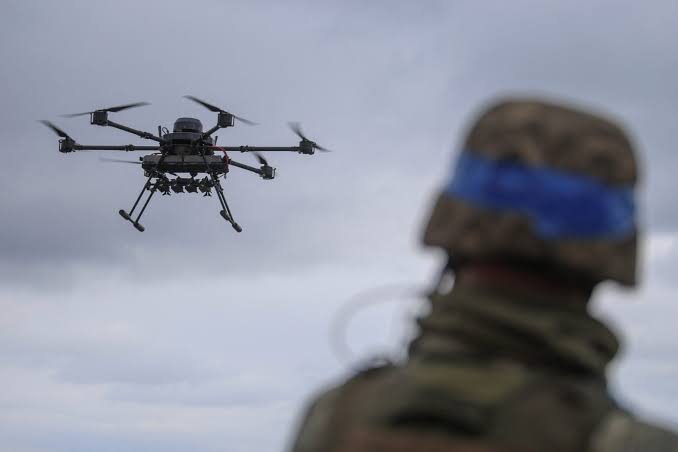
In particular, deep strikes against Russia’s strategic aviation capabilities have demonstrated that relatively low-cost unmanned systems can be employed against far more valuable military assets through proper planning, concealment, logistical preparation, and target selection.
The fundamental lesson here is that technology alone does not determine the outcome. What matters is not only what a drone can do, but also which target it is sent against, when it is deployed, and as part of which operational plan.
Therefore, in modern warfare, the terms “AI-enabled drone” or “autonomous system” do not in themselves constitute a strategic effect. How the technology is integrated into an operational plan remains decisive.
A new cost war in air defence
Another important issue exposed by mass drone attacks is the economic sustainability of air defence.
Using a much more expensive missile to intercept a low-cost attack platform can create serious cost pressure for the defending side in prolonged wars. For this reason, the air-defense architecture of the future will not consist solely of more advanced missiles.
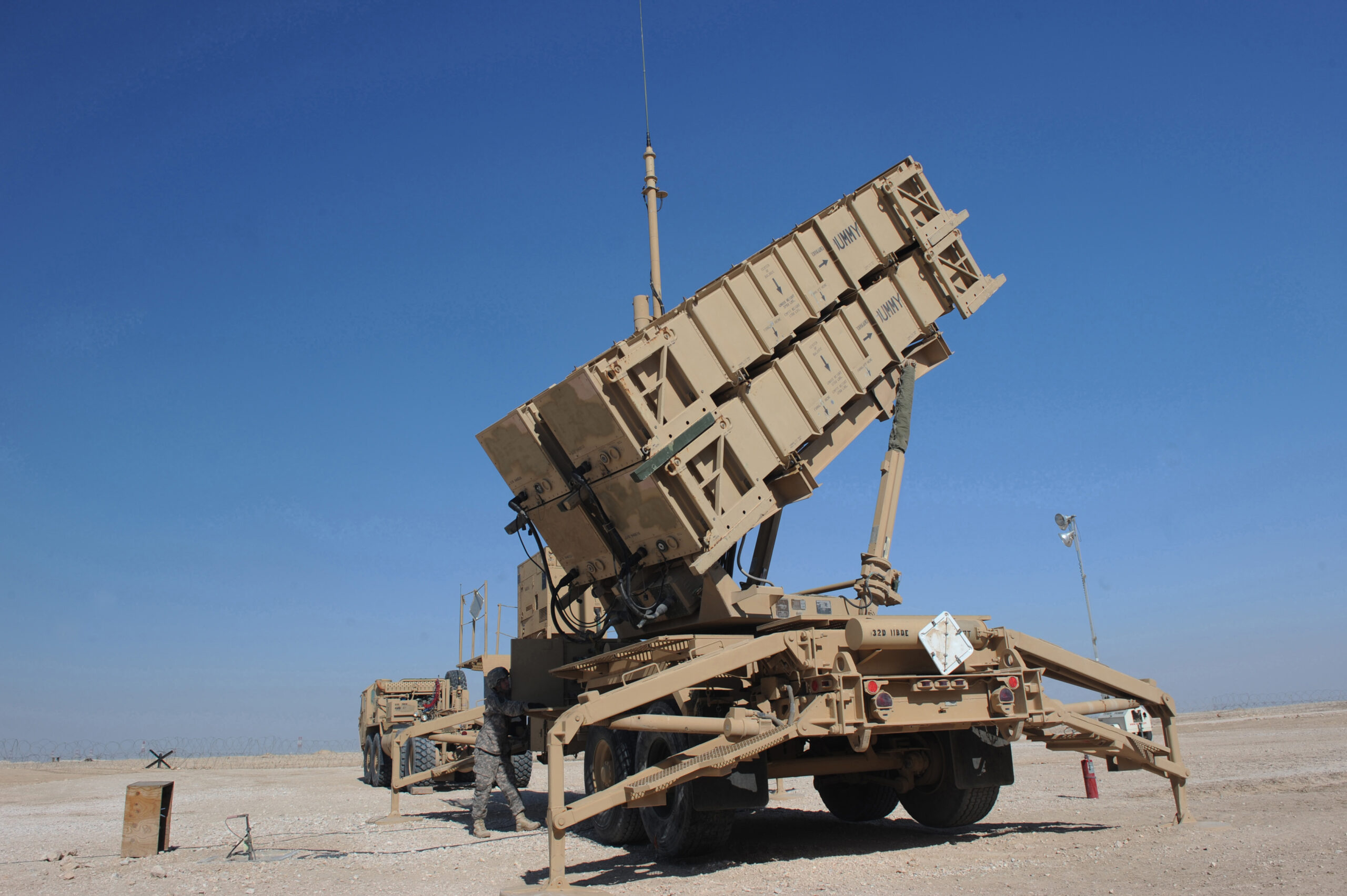
Interceptor drones, electronic warfare, automated weapons, low-cost interceptors, and eventually directed-energy systems will all be considered within the same equation.
The important question is not whether a drone attack can overcome the air defenses currently in place. The real issue is whether the same attack model will remain economically and operationally viable after the adversary develops new defensive methods.
In other words, the advantage in drone warfare is not permanent. Every new technology generates a counter-technology, and the sides rapidly learn from one another’s methods.
Five thresholds on the road to strategy
At least five fundamental elements must work together for a truly strategic swarm capability to emerge.
First, a robust command-and-control architecture is essential. Simply adding more drones to a system does not increase its capability by itself. Platforms must be able to operate without interfering with one another, missions must be redistributed, and the network must be capable of reorganizing itself after losses.
The second element is resilience in an electronic warfare environment. A swarm system dependent on continuous connectivity can lose its effectiveness the moment that connection is disrupted. Future systems therefore need to retain part of their decision-making capabilities onboard and remain capable of operating despite GNSS disruption, communications jamming, and losses within the network.
The third element is industrial capacity. Developing autonomous systems as a handful of prototypes is not enough. Strategic capability requires these platforms to be produced in large numbers, at low cost, and on a sustainable basis. The production chain must encompass the entire ecosystem, from sensors and processors to communications systems and software.
The fourth element is doctrine. The ability of large numbers of drones to strike large numbers of targets does not, by itself, constitute operational success. Swarm systems must be connected to broader objectives such as suppressing air defenses, opening an operational corridor, paralyzing command centers, or facilitating the maneuver of another force.
The fifth, and perhaps most critical, element is the cost balance. Swarm systems provide an advantage as long as they can continuously increase the adversary’s defensive costs. If the enemy develops cheaper interceptors, electronic warfare capabilities, or counter-swarm technologies, the existing advantage may disappear.
The real competition is only beginning
The capabilities developed by Russia and Ukraine throughout the war have already revealed different components of the unmanned warfare architecture of the future.
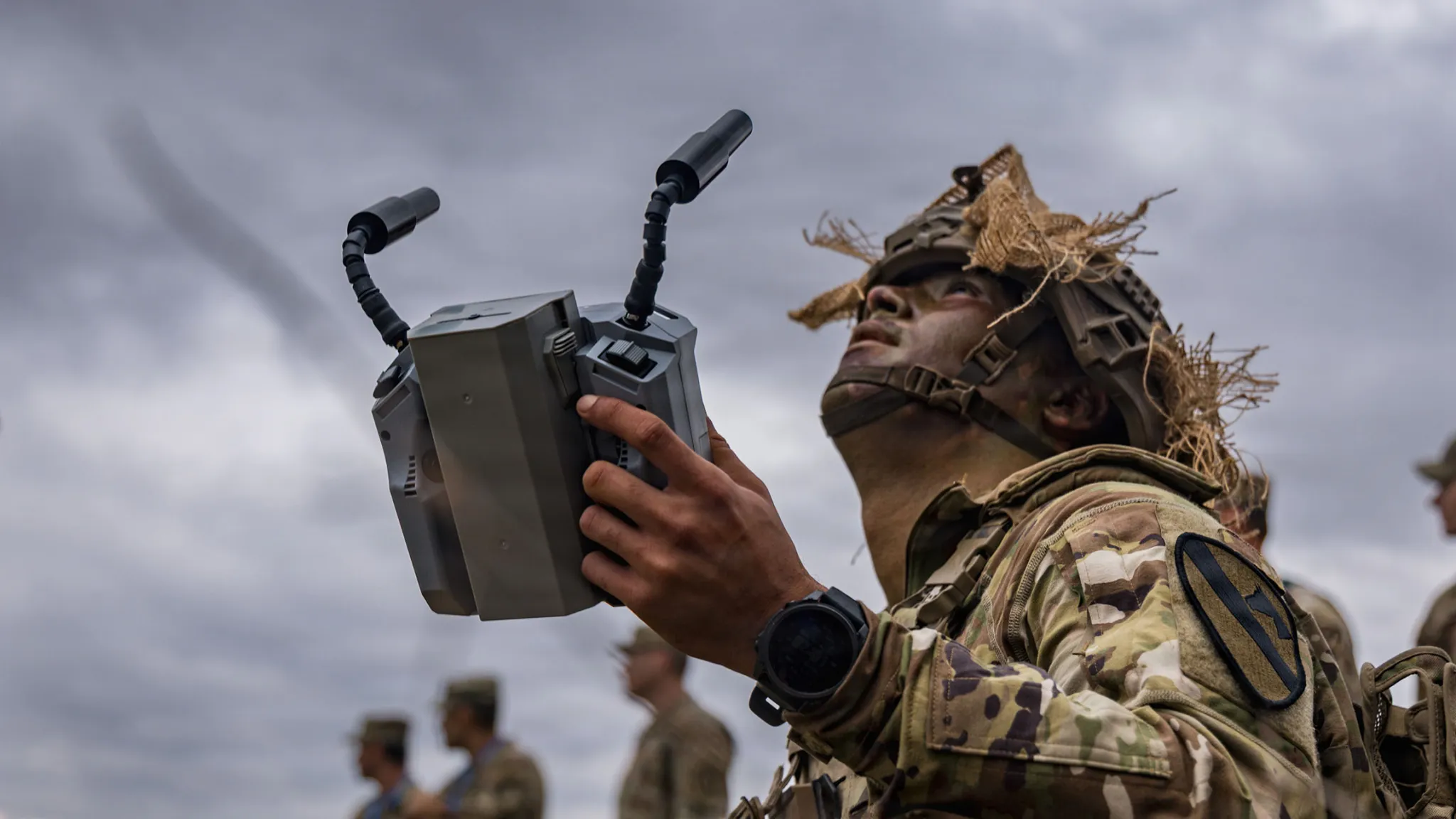
Russia’s strengths lie in large-scale production, sustained attack capacity, and experience in employing different platforms within the same operation. Ukraine’s prominent advantages include rapid innovation, the ability to transfer battlefield data into new systems in a short period of time, and experience in autonomous coordination.
However, the decisive phase of the future will begin where these two approaches converge.
The presence of hundreds of drones in the sky at the same time is no longer, by itself, a surprising development. The real transformation will occur when these platforms can communicate with one another, perceive their surroundings, alter their missions, compensate for losses, and continue operating toward a common objective even under electronic warfare conditions.
For this reason, the new measure of modern warfare will not be the number of drones. The decisive factor will be the integration of network strength, autonomy, production capacity, electronic-warfare resilience, and doctrine within the same system.
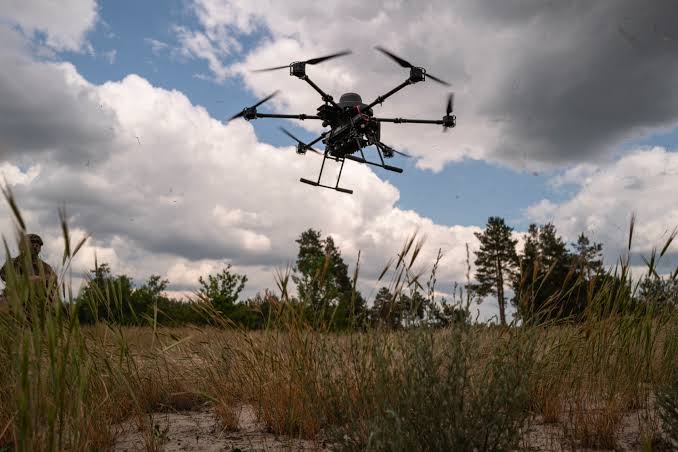
Today, all of the components of this capability exist separately. Yet it cannot be said that they have fully evolved into a single, continuously operating, low-cost, strategic-scale combat system.
The critical competition in the next phase of military rivalry will take place precisely here: the sides will seek not merely to produce more drones, but to transform their drone fleets into combat networks capable of organizing themselves despite enemy interference. Those who reach this stage first will not only gain the ability to strike more targets; they will also change the way decisions are made and force is employed on the battlefield.
Source: Times of Defence